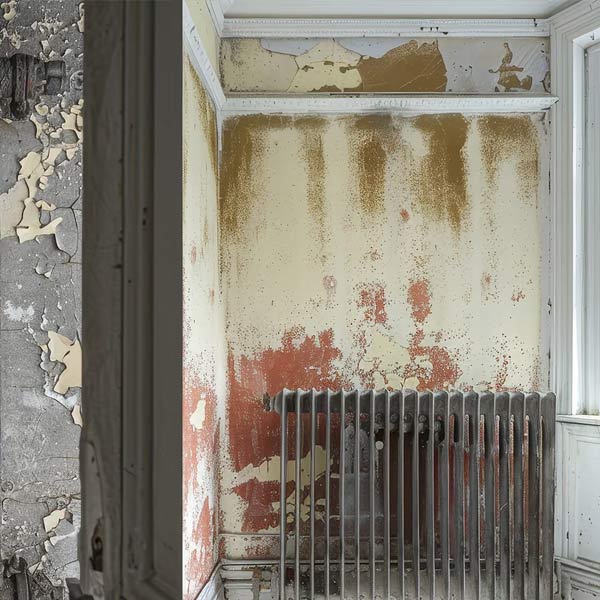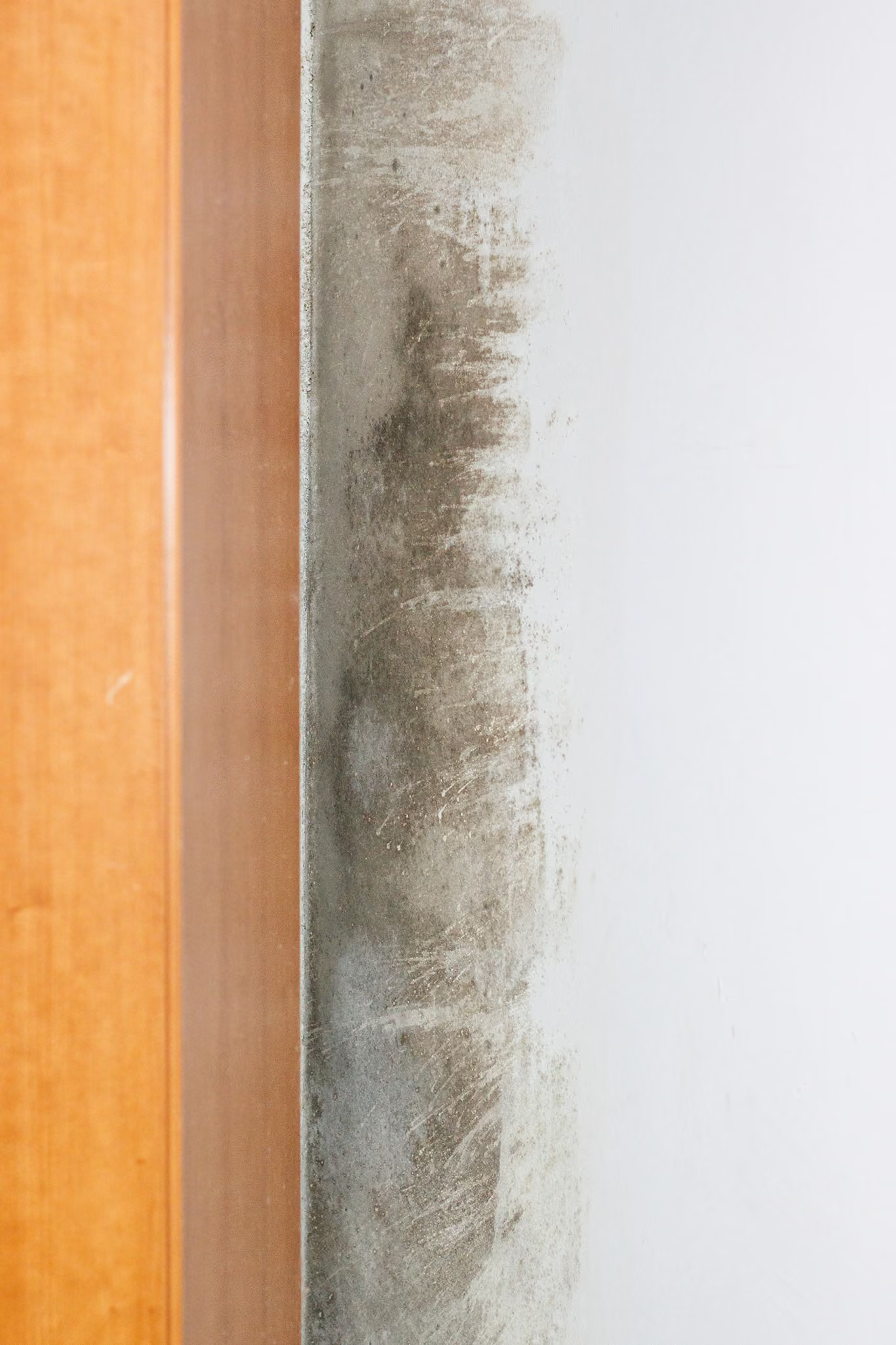
Rising damp and trapped moisture look similar on the surface, a damp patch, sometimes peeling paint or plaster, sometimes a musty smell, but they have different causes and need completely different repairs. Treating trapped moisture as if it were rising damp (with a chemical injection course, for example) doesn't fix anything, because the actual cause was never rising groundwater to begin with.
True rising damp is groundwater drawn up through a wall by capillary action, in the absence of an effective damp proof course. It's confined to the lower part of a wall, typically up to around a metre from ground level, and tends to leave a fairly even tide mark, since it rises to roughly the same height around the affected area. It's also, in practice, considerably rarer than it's often assumed to be.
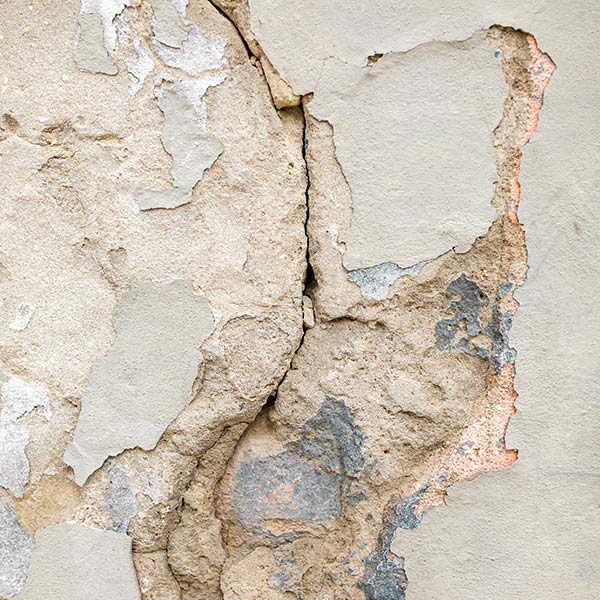
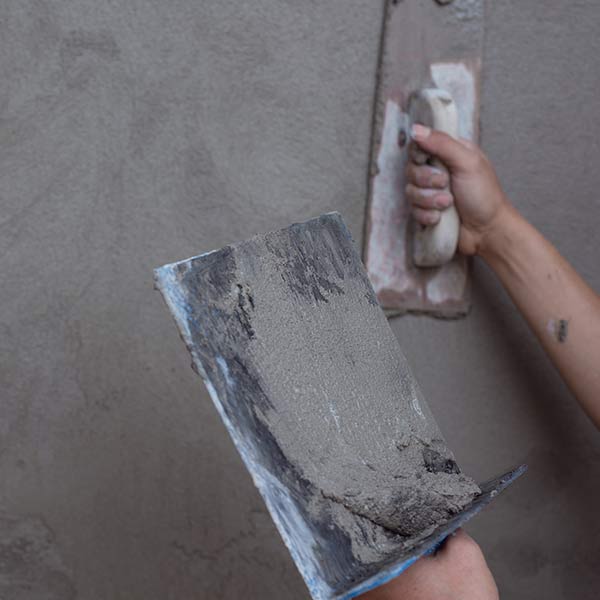
Trapped moisture, most often caused by a previous cement render, gypsum plaster, or another impermeable repair sealing a wall that should be breathing, can appear at any height on a wall, not just near the ground. It often correlates with where an incompatible repair was carried out rather than with ground level, and can be patchy or uneven rather than following a neat tide line.
Condensation from poor ventilation is extremely common in occupied period properties and gets misdiagnosed as rising damp fairly often, particularly in bathrooms, kitchens, and poorly ventilated corners. Penetrating damp from a specific external defect, a cracked render, a failed gutter, can also mimic rising damp if the entry point happens to be near ground level.
A proper diagnostic survey looks at the pattern and height of the damp, checks external factors (ground levels, guttering, render condition), assesses ventilation, and examines the wall build up itself rather than relying on a single moisture meter reading, which can give misleading results on a wall with embedded salts, a common by product of exactly the kind of old damp treatments this article is warning against.
If the actual cause is trapped moisture from a previous cement repair, the fix is removing that repair and reinstating breathable materials, not injecting a chemical damp proof course into a wall that never had rising damp in the first place. Treating the wrong diagnosis doesn't just waste money, it can leave the actual problem untouched and continuing to cause damage.
While a proper diagnosis should always come from a full survey, a few quick observations can point you in the right direction before you call anyone. Is the damp confined to roughly the bottom metre of the wall, or does it appear higher up too? Is there a specific external feature nearby, a downpipe, a crack in render, a raised flower bed, that lines up with where the damp appears? Has the damp got worse since any building work was carried out on or near that wall? None of these confirm a diagnosis on their own, but they're useful information to have ready when a surveyor visits.
Both genuine rising damp and some cases of trapped moisture can leave behind salt deposits in the wall, either from the ground or from certain building materials, and these salts are hygroscopic, meaning they actively draw in moisture from the air. A wall with embedded salts can read as persistently damp on a standard moisture meter even after the original source has been fixed, which is one of the reasons a simple meter reading alone isn't a reliable way to diagnose or confirm treatment success.